

The holidays are filled with sounds that make the season special—laughter around the dinner table, grandchildren sharing stories, favorite Christmas songs, and heartfelt conversations with loved ones. But when hearing loss goes unaddressed, these meaningful moments can become frustrating or difficult to enjoy. Why wait until after the holidays to reconnect with the sounds and people you love when you can act now? Hearing loss can make family gatherings exhausting, especially when multiple conversations compete with background noise. Addressing your hearing now can help you feel more engaged, confident, and connected throughout the celebrations. Today's advanced hearing technology is designed to improve speech clarity, reduce background noise, and help you participate more fully in life's special moments. At Johnson Audiology, our doctors of audiology can help you explore solutions tailored to your hearing needs and lifestyle. Don't miss another moment. Schedule your hearing evaluation today and enjoy the sounds of the holidays!
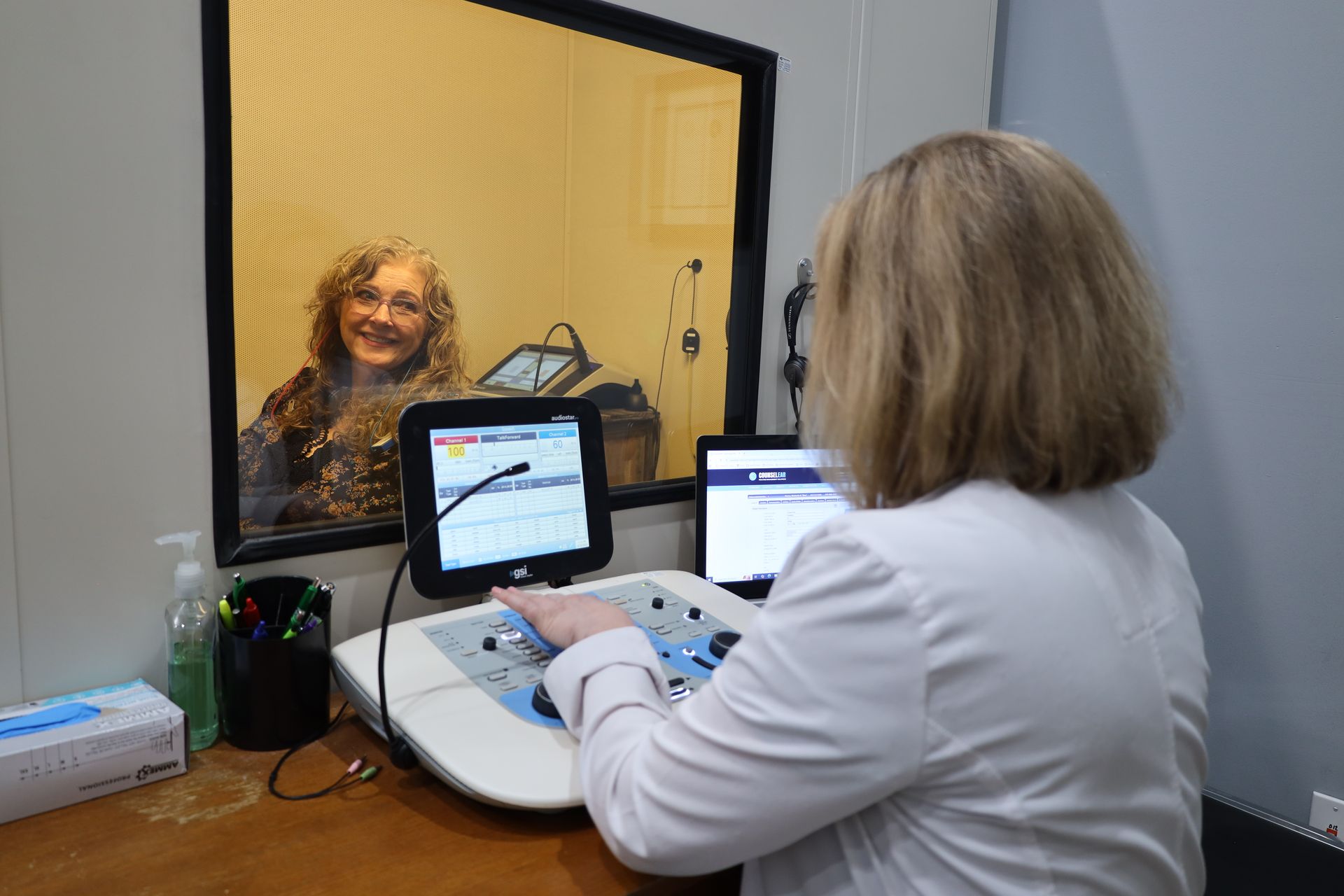
For years, Johnson Audiology patient Kim Haney lived with a constant sound that no one else could hear. What began in her mid-30s as relentless tinnitus eventually became hearing loss that affected nearly every aspect of her daily life—from conversations with loved ones to simple interactions in restaurants. "The tinnitus was like being locked in a room with 10,000 crickets and not being able to escape," Kim recalls. "It was 24 hours a day, seven days a week. It affects your concentration. It affects your ability to hear what's going on around you without focusing in on the crickets." Her husband, Jim, witnessed the changes long before he understood what was causing them. "She would become agitated, and I didn't know what it was," he says. "After doing a little research, I realized the tinnitus was really the root of her agitation." As Kim's hearing declined, he found himself translating conversations, repeating what restaurant servers had said, and filling in the gaps she couldn't hear. "I was tired of translating," he laughs. "So I said, 'You're going to see an audiologist.'" That decision changed everything. Kim still remembers the emotions of her first appointment with Dr. Megan Johnson, founder and owner of Johnson Audiology. "When Dr. Johnson held up a notecard in front of her mouth during my hearing test appointment, I just burst into tears," she says. "When I didn’t have the visual cue of reading her lips, that's when I realized how much I had been missing." Now, after years of hearing care and advancements in technology, Kim says the difference is remarkable. "The technology has jumped in leaps and bounds," she says. "It's incredible how much it continues to evolve." One of the most meaningful moments came when Jim surprised her with new hearing aids as a Christmas gift. "I was expecting one of his paintings. He’s a wonderful artist, and I wanted a piece of his artwork for my office at work," Kim says with a smile. "Instead, I unrolled the package to find a handmade certificate he had created elling me I was getting new hearing aids. I started crying. It was such a thoughtful gift." Jim has no regrets about his unconventional present. "Instead of rings and watches," he says, "I gave her hearing aids." Kim agrees without hesitation. "I’ll take hearing aids over jewelry any day." Today, after more than two decades together, the Haneys know that better hearing is about far more than hearing sounds. It's about understanding conversations, sharing experiences, and fully enjoying life. For Kim, seeking treatment didn't just improve her hearing—it gave her back the moments that matter most. In fact, she used her new hearing aids recently at a rock concert for the first time. “My friend and I had so much fun! It was amazing!” Kim says.

As the year comes to a close, you may have an opportunity to make the most of your health insurance benefits before they reset on January 1. By the third and fourth quarters, many people have already met their annual insurance deductible or out-of-pocket maximum. But what does that mean for your hearing healthcare? Understanding Your Benefits Your deductible is the amount you pay for covered healthcare services before your insurance begins sharing certain costs. Your out-of-pocket maximum is the most you'll pay for covered, in-network services during your plan year. Once reached, insurance generally pays 100% of covered expenses. Depending on your policy, this could mean significant savings on hearing evaluations and hearing aid technology, with some plans covering a percentage or even the full cost. We Help You Understand Your Coverage At Johnson Audiology, we have dedicated insurance specialists on staff who contact your insurance provider to verify your hearing healthcare benefits before your appointment. This means your audiologist has your coverage information available during your visit, helping you understand your options, potential costs, and available benefits so you can make an informed decision about moving forward with hearing technology. Don't Forget Your HSA and FSA Dollars! Health Savings Accounts (HSA) and Flexible Spending Accounts (FSA) can help cover eligible hearing healthcare expenses. Some FSA funds may expire at year's end, so be sure to check your balance! Your Benefits May Reset January 1. Schedule Now! The sooner you schedule, the more time you have to explore your hearing healthcare options before the year ends. Appointments fill quickly during the fourth quarter, and waiting until December could limit your options. Whether you're considering hearing aids for the first time, exploring newer technology, or simply due for a hearing evaluation, now is the time to take action. Don't let valuable insurance benefits go unused! SCHEDULE YOUR APPOINTMENT ONLINE TODAY Choose your preferred Johnson Audiology location and request an appointment before the end-of-year rush. Our team will help verify your benefits so you can make an informed decision about your hearing healthcare. Insurance coverage varies by plan. Verification of benefits does not guarantee payment or coverage.